Deciding between a felt, GRP or EPDM flat roof is easier than it looks, because each suits a different kind of roof. What matters more than the system is the deck under it and the edges around it, which is where every flat roof we have ever stripped had failed.
Torch-on felt
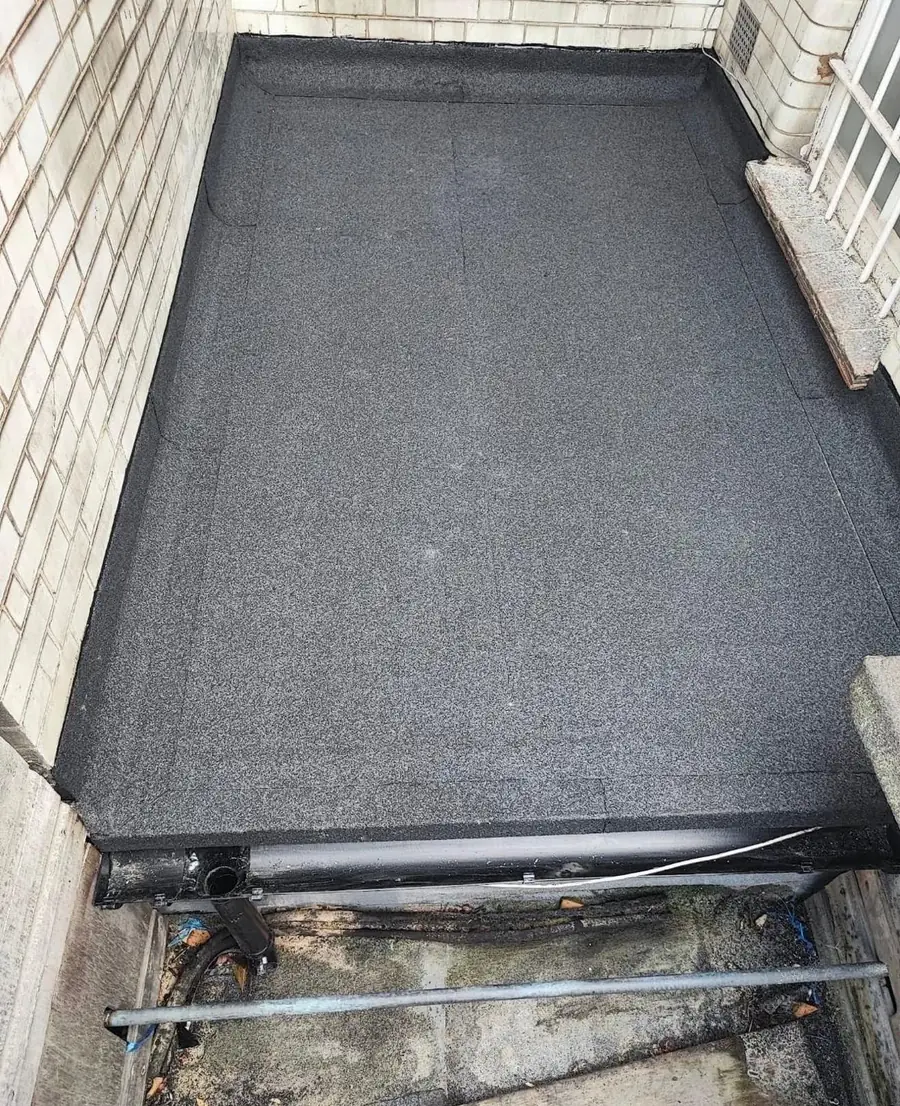
A built-up system of two or three layers of modified bitumen felt, heat-bonded to the deck and to each other, finished with a mineral cap sheet. It is the most economical, easy to repair locally, and the right choice for garages, sheds and simple rectangular extensions. Laid properly with a good deck and falls it lasts 20 years and more.
GRP fibreglass
Resin and glass mat laid wet over a new OSB deck to form a single seamless skin, with pre-formed trims at the edges and the upstands formed in the same material. It costs more than felt, must be laid in dry weather, and is the best system for roofs with rooflights, lanterns, pipes and changes of level, and for roofs that are walked on. Typically guaranteed by manufacturers for 20 to 25 years.
EPDM rubber
A single sheet of synthetic rubber, cut to the roof and bonded to the deck, with almost no joins. It moves with the building, is not damaged by ponding or sunlight, and suits large simple roofs that will be left alone for years. It is not ideal for heavy foot traffic or complicated detailing. Manufacturers rate it for 25 years and more.
What actually makes a flat roof fail
Not the covering. A soft deck, falls that leave water standing, an outlet in the wrong place, edge trims that were glued not fixed, and upstands that were too low or finished in mastic. Any of the three systems will fail early on a bad deck and last decades on a good one, which is why we re-deck rather than overlay.
Our recommendation
Garage or simple extension: felt or EPDM. Rooflights, lanterns or a terrace: GRP. Not sure: ring us and we will look and quote the one that suits, with an alternative to compare.