
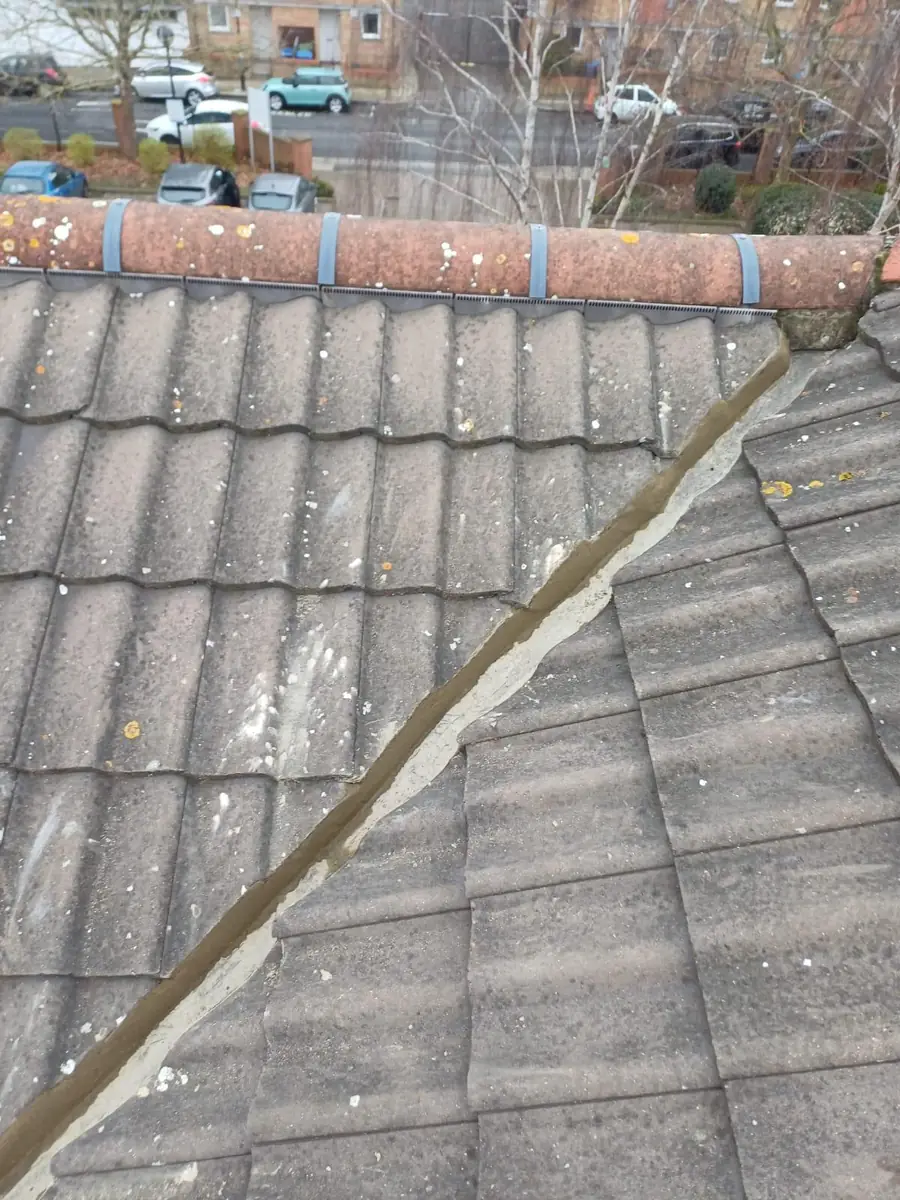
Roof repair or replacement is the first question with a leaking or tired roof, and most roofs that leak do not need replacing. A few that look fine from the road are finished. The difference is usually visible from inside the loft, and this guide tells you what to look for before anyone quotes you for a new roof.
Start in the loft
Take a torch up on a dry day. Sound felt or membrane between the rafters means the roof has a second line of defence and most problems are repairs. Felt hanging in strips, crumbling to dust, or no felt at all, with daylight showing through the tiles, means the covering is the only thing keeping the water out and the roof is at the end of its life. Look at the rafters and the tops of the walls for dark staining, softness or white fungal growth.
Then look from the ground
Slipped tiles, a few cracked ones, mortar missing from the ridge or the verge, moss and a lead flashing that has lifted are all repairs. Tiles with the surface gone across whole slopes, a rash of previous patches in different colours, a sagging ridge or a dip between rafters, and slates sliding out every winter point to replacement.
Count the repairs
If the same roof has needed a roofer three winters running, add up what it has cost. Repairs are cheap individually and a subscription collectively. At some point a new roof is the cheaper spend, and the point is usually when the felt has gone.
Ask the roofer these questions
What exactly is letting the water in? Can I see a photo of it? Is the felt sound? What are the timbers like? What happens if I just repair it? If the answer to the last question is that the same thing will happen again next winter, replacement is the honest recommendation. If a roofer quotes a new roof without going in the loft, get another opinion.
What we do
We look from the roof and from the loft, tell you which you have, and quote it in writing. We repair and replace, so we have no reason to steer you either way.